
O vibrante e diversificado Carnaval de Salvador, Bahia, pode tocar em uma variedade de assuntos relacionados à IA.

Planejamento de Eventos e IA: A IA pode ser usada no planejamento de eventos para otimizar a logística, gerenciar multidões e aumentar a segurança durante grandes eventos como o Carnaval em Salvador. Pode ajudar os organizadores a tomar decisões baseadas em dados para garantir que o evento corra bem.

Preservação Cultural: A IA e as tecnologias digitais podem ser empregadas para documentar e preservar as ricas tradições culturais, músicas e formas de dança que são parte integrante do Carnaval de Salvador.

Tradução de idiomas: Com pessoas de diversas origens participando do Carnaval, as ferramentas de tradução de idiomas baseadas em IA podem facilitar a comunicação e o intercâmbio cultural entre os participantes.

Turismo e Recomendações: Algoritmos de IA podem analisar as preferências do usuário e recomendar roteiros personalizados para turistas que visitam Salvador durante o Carnaval, melhorando sua experiência geral. Segurança Pública e

Proteção: A IA pode ajudar a monitorizar o comportamento das multidões, identificando potenciais ameaças à segurança e garantindo a segurança dos participantes durante eventos de grande escala como o Carnaval.

Gestão de Tráfego: Salvador enfrenta trânsito intenso durante o Carnaval. A IA pode ajudar a otimizar o fluxo de tráfego e fornecer atualizações em tempo real para ajudar os participantes a navegar pela cidade com mais eficiência.

Análise de mídias sociais: a IA pode ser usada para analisar postagens e tendências em mídias sociais relacionadas ao Carnaval, fornecendo insights sobre quais aspectos do evento são mais populares e como os participantes estão compartilhando suas experiências.

Previsão do tempo: a previsão do tempo baseada em IA pode ser crucial para o planejamento de eventos ao ar livre como o Carnaval, garantindo que os organizadores estejam preparados para quaisquer desafios relacionados ao clima.

Vendas e preços de ingressos: algoritmos de IA podem otimizar o preço e a distribuição de ingressos para maximizar a receita e garantir que os ingressos estejam disponíveis para uma ampla gama de participantes.

Reconhecimento facial: A tecnologia de reconhecimento facial alimentada por IA pode ser usada para validação de ingressos, controle de acesso ou até mesmo para identificação de indivíduos perdidos durante o evento. Esses tópicos demonstram as diversas maneiras pelas quais a IA e a tecnologia podem se cruzar com


Using Cloud Solutions to Improve Airport Operations

Using Cloud Solutions to Improve Airport Operations
Airports require the smooth coordination of a wide range of operations, from security and luggage handling to aircraft scheduling and passenger services. Airports are complex ecosystems. Airports are using creative ways to address the issues posed by the rising demand for efficient services and the number of travelers. Cloud computing is one such answer, and it is completely changing how airports run.

Access to Real-Time Data
Real-time data access is one of the cloud computing’s biggest benefits. It might be difficult to transfer information across departments when traditional systems operate in silos. These restrictions are removed by cloud technologies, enabling real-time data sharing and analytics. For instance, ground crew can instantaneously view flight schedules and receive real-time updates on the whereabouts of baggage. This degree of cooperation can greatly improve operational effectiveness.

Flexibility and Scalability
The amount of traffic at airports changes throughout the year. The scalability of cloud technologies allows for easy handling of these swings. Cloud resources can be scaled up during peak seasons to handle the increased traffic and scaled down during off-peak times to reduce costs. Regardless of passenger volume, sustaining high levels of service quality depends on this flexibility.

Enhanced Security Procedures
Airport security is their first priority. Advanced security mechanisms, such biometric authentication and real-time monitoring, can be incorporated into current systems using cloud-based solutions. In addition to enhancing airport security, these innovations speed up procedures like check-ins and security checks, which enhances the entire passenger experience.

Efficiency in Maintenance
Predictive maintenance can benefit greatly from cloud solutions. Escalators, airplanes, and other airport equipment can all have sensors fitted to gather performance information. Real-time analysis of this data can be used to determine when maintenance is necessary, minimizing downtime and ensuring that all systems are working to their full potential.

Goals for Sustainability
Airports are putting more emphasis on sustainability, and cloud computing can help with that. The carbon footprint of an airport can be greatly decreased by resource optimization and energy-efficient data centers. Additionally, cloud-based analytics can assist airports in better monitoring and managing their energy usage.

Sentiment
It is a fundamental shift in how airports operate, not merely a technology advancement, to use cloud computing. Cloud technologies provide a range of advantages that can dramatically improve airport operations, including real-time data access, enhanced security measures, scalability, and sustainability. It will be essential for airports to adopt cloud technologies as they develop in order to handle present-day difficulties and deliver the efficient, secure, and environmentally friendly services that travelers now demand.

The Future of Real-Time Travel Demand Forecasting with AI and Machine Learning

Although it has always been essential to modern society, the transportation industry is not without problems. There has never been a bigger need for intelligent solutions due to clogged roads and ineffective public transportation. Then there are technologies like artificial intelligence (AI) and machine learning, which are revolutionizing how we perceive and control travel demand in real time.

The Issue with Conventional Techniques

Traditional techniques for predicting travel demand frequently rely on static models and historical data. These methods are helpful, but they aren’t flexible enough to modify in real time. For instance, a quick change in the weather or a significant event might significantly alter travel patterns, rendering the conventional models immediately obsolete.

The Advantage of AI

Real-time data analysis using AI and machine learning algorithms is possible with a variety of data sources, including social media, GPS devices, and traffic cameras. They are able to estimate trip demand with astounding accuracy, enabling more effective resource allocation. For instance, more buses or trains could be sent to a certain location if AI identifies a spike in the demand for public transportation there.

Fairness in Prediction

The creation of fairness-aware models is one of the most exciting developments in this area. To achieve fair predictions, these algorithms take into account socioeconomic aspects including ethnicity, income, and education. This is important for policy-making because it prevents transportation design from unintentionally exacerbate social inequities.

The Road Ahead

As AI and machine learning technologies continue to evolve, their role in real-time travel demand forecasting will only grow. They offer a dynamic, accurate, and fair approach to managing one of the most complex systems in our society—the way we move.

Cloud Computing and the Use of AI and Machine Learning

The Role of AI and Machine Learning in Cloud Computing

Artificial Intelligence (AI) and Machine Learning (ML) are at the forefront of technical progress in today’s quick-paced digital world. These innovations are transforming how businesses run thanks to their extraordinary efficiency and scalability via the cloud. The capabilities of cloud services have been improved by this synergy, making them wiser, more adaptable, and exponentially more potent. But exactly what function do AI and ML serve in cloud computing? Let’s start now.

Improving data management

Businesses can already store enormous volumes of data for comparatively little money thanks to cloud computing. Organizations must understand this data in order to use it; simply holding it is not sufficient. ML and AI can help with this. Terabytes of data can be combed through by machine learning algorithms to find patterns, trends, and anomalies, turning raw data into useful insights. Predictive analytics, for instance, can project future trends by analyzing past customer behavior, assisting firms in making informed decisions.

Aiming to Improve Security and Compliance

In the age of sophisticated cyberthreats and strict data protection regulations, security is of the utmost importance. AI-driven security systems may monitor network activity continuously and look for irregularities that could indicate a security compromise. As intelligent systems can learn and adapt to new sorts of threats, traditional security solutions that rely on pre-defined rules are becoming obsolete. This improves the security of cloud systems and helps them comply with laws like the GDPR.

Operations Automation

Another area that benefits greatly from the fusion of cloud computing and machine learning is operational efficiency. Artificial intelligence (AI)-powered automated processes can handle jobs like data entry and customer care, freeing up human employees to work on more challenging and innovative areas of the company. For a smooth customer experience, cloud-based companies are increasingly using tools like chatbots and automated customer support agents.

Resource Management

Cloud resource allocation can be optimized by machine learning algorithms to ensure optimum effectiveness and minimal waste. This leads in significant cost reductions while also improving the sustainability of cloud operations. For instance, a machine learning system can assess the usage trends of a cloud storage service and real-time modify resource distribution, lowering operational expenses.

Encourage Innovation

New types of services and applications have been created as a result of the symbiotic relationship between AI and cloud computing. The combination of machine learning and cloud computing is accelerating technological advancement at an unheard-of rate, enabling anything from driverless vehicles and smart cities to AI-powered medical diagnosis.

Discussion

In the final analysis, the incorporation of AI and machine learning into cloud computing is more than just a trend in technology—it represents a substantial advancement. It enhances the intelligence, security, and efficiency of cloud platforms, fostering innovation and operational excellence. Businesses must comprehend and take advantage of this potent combination if they want to remain competitive in the modern marketplace.

Cloud computing, AI, and ML are still in their infancy as a marriage, and as they develop, we can only speculate about the revolutionary changes they will bring. So whether you’re a Fortune 500 firm or a startup, the time has come to embrace this complementary connection and take advantage of everything that it has to offer.

Top Home Cloud Solutions: Storing Your Digital Life Securely and Efficiently

Data is everything in the modern digital world. We continually produce and store digital stuff, from priceless family images to crucial professional papers. But how can we keep all that information accessible, safe, and secure? With the help of home cloud storage options, you can easily save, share, and access your crucial information from any location. We’ll look at some popular home cloud options in this article, and I’ll give my top choice for the greatest overall option.

Software Services

Google Drive

Google Drive connects with Google’s suite of products, including Google Docs, Sheets, and Slides, and provides 15 GB of free storage. It has strong sharing and collaborative features and is user-friendly.

Dropbox

Dropbox is a pioneer in the field of cloud storage. It has a simple user interface, 2 GB of free storage, and is made for both individual and group use. Additionally, it has Dropbox Paper for planning and taking notes.

Apple iCloud

Apple iCloud provides 5 GB of free storage and easy cross-device connectivity for images, texts, and more for users of Apple products. Although it’s simple to use, the Apple ecosystem is where it works best.

Microsoft OneDrive

For those who currently use Microsoft’s software, OneDrive, which is integrated with Microsoft Office, offers 5 GB of free storage. It’s great for both home and office storage.

Amazon Drive

Amazon Drive is a feasible choice for current Amazon users thanks to its 5 GB of free storage and close interaction with Amazon’s ecosystem, particularly Amazon Prime Photos.

My Top Pick: Google Drive

My top choice for the finest home cloud option is Google Drive due to the delicate combination of storage space, usability, and collaborative features. The amount of free storage is greater than most other providers at 15 GB. It is a clear winner for the ordinary user due to its seamless connection with other Google services, powerful sharing capabilities, and user-friendly layout. Additionally, Google’s strong security protocols support it.

Google Drive offers a complete solution that satisfies a range of demands, whether you’re a student, a professional, or just looking to safely save and access your digital memories.

Folks, there you have it! Although there are many options available for home cloud solutions, hopefully this guide has helped you go through your choices. Pick the one that best suits your storage demands, level of tech knowledge, and price range.

Have fun storing!

Understanding Amazon Web Services (AWS) in the 21st century

In the twenty-first century, it is becoming more and more crucial to comprehend Amazon Web Services (AWS) for a variety of reasons that cut across numerous industries and professions. The following significant details underline its importance:

Cost-Efficiency for Businesses and Enterprises: Businesses can scale and react quickly with AWS without having to spend money on physical gear. This is especially advantageous for new businesses and SMEs.

Global Reach: Companies can deploy their services across several regions and serve a global clientele thanks to AWS’s extensive network of data centers.

Innovation: With AWS, businesses can concentrate on developing new products rather than managing infrastructure, which promotes quicker innovation.

Security: With the help of AWS’s robust built-in security features, businesses can safeguard data, identities, apps, and devices.

AWS services abide by all applicable regional, governmental, and international regulations, such as Compliance: AWS services help organizations more easily meet compliance requirements since they adhere to local and international legislation.

Technology and Growth

Scalability: Due to the variety of services that AWS offers, which make scaling simple, it is appropriate for both small projects and complex enterprise solutions.

Versatility: AWS gives developers flexibility by supporting a large number of programming languages, databases, and operating systems.

DevOps Support: AWS provides a set of flexible services designed to enable companies to more rapidly and reliably build and deliver products.

AI and machine learning: AWS provides a wide range of cloud infrastructure and machine learning services.

Support for IoT: AWS IoT services provide safe, two-way communication between devices connected to the Internet.

Education and Career talent Development: Being able to use AWS is a useful talent in the labor market, with applications in cybersecurity, data management, cloud computing, and other fields.

AWS credentials can considerably improve employment chances in IT and other tech-related industries, which can lead to career advancement.

Research: Using the computing capacity offered by AWS, academic and scientific research can be expedited.

Data storage for social and everyday activities is offered by AWS in the form of trustworthy personal-use services like Amazon S3.

The streaming services, gaming networks, and other media services that consumers use on a daily basis are all powered by AWS.

Anyone involved in modern business, technology, or data management will find that having an understanding of AWS is not just helpful but frequently even necessary. This understanding will probably become even more important as the 21st century progresses.

The Power of Hydration: The Effects of Water on Your Body After Exercise

Introduction

A healthy lifestyle must include exercise since it has several advantages, including improved cardiovascular health, increased muscle strength, and improved happiness. But what many individuals fail to recognize is how vital water is to maximizing the benefits of their workouts. Water is the essence of life, and it has a significant effect on your body, particularly after a strenuous workout. We’ll discuss how water affects the body after exercise in this blog post and why it’s crucial to maintain sufficient hydration for your general health.

Cooling the Body Down

Your body temperature increases while you exercise because of increased metabolic activity and muscle contractions. The body naturally cools down by sweating, but this process also causes electrolyte and fluid loss. Your body’s capacity to control its temperature can be compromised by dehydration, which can cause overheating and potentially harmful conditions including heat exhaustion or heat stroke. After working out, drink some water to assist your body cool down and avoid these problems, keeping you comfortable and safe.

2. Replenishing Fluids Lost

You can lose a large amount of fluids through sweating and increased respiration during a standard workout. Dehydration, which can cause symptoms including weariness, muscle cramps, and disorientation, can result from this fluid loss. After an exercise, it’s important to hydrate with water to assist your body’s fluid equilibrium return, which will speed up your recovery and make you feel more invigorated.

3. Encouraging Muscle Activity

The proper functioning of muscles depends on water. Dehydration can make muscles tight and crampy and interfere with how well they contract. Your muscles may be exhausted after working out and require adequate fluids to heal and recover. Water consumption speeds up recovery and lowers your risk of developing post-workout pain by removing waste products from your body and delivering vital nutrients to your muscles.

4. Facilitating Digestive and Nutritional Support

Your body requires nutrition to repair and grow muscles after working out. Water helps break down food in the stomach and distributes nutrients to the cells, which makes it crucial for digestion and nutrient absorption. Your body’s ability to absorb the proteins, carbs, and vitamins required for muscle recovery and general health is dependent on how well hydrated you are.

5. Preserving Joint Wellness

Water is essential for maintaining the health of your joints. Drinking enough water makes motions easier and less painful by lubricating the joints and lowering friction. After exercising, when your joints may be stressed, staying hydrated helps reduce your chance of injury and increase joint health.

6. Improving Cognitive Ability

Dehydration can have a negative effect on cognitive performance, resulting in impaired focus, concentration, and judgment. You might need to make crucial post-exercise decisions regarding your diet, relaxation, and recovery after a workout. Staying hydrated can aid in decision-making and mental clarity.

6. Improving Cognitive Ability

Dehydration can have a negative effect on cognitive performance, resulting in impaired focus, concentration, and judgment. You might need to make crucial post-exercise decisions regarding your diet, relaxation, and recovery after a workout. Staying hydrated can aid in decision-making and mental clarity.

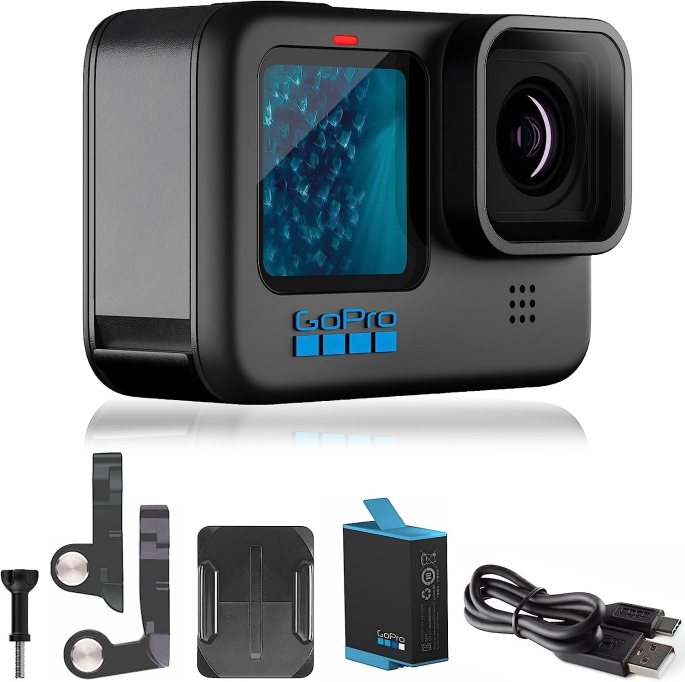
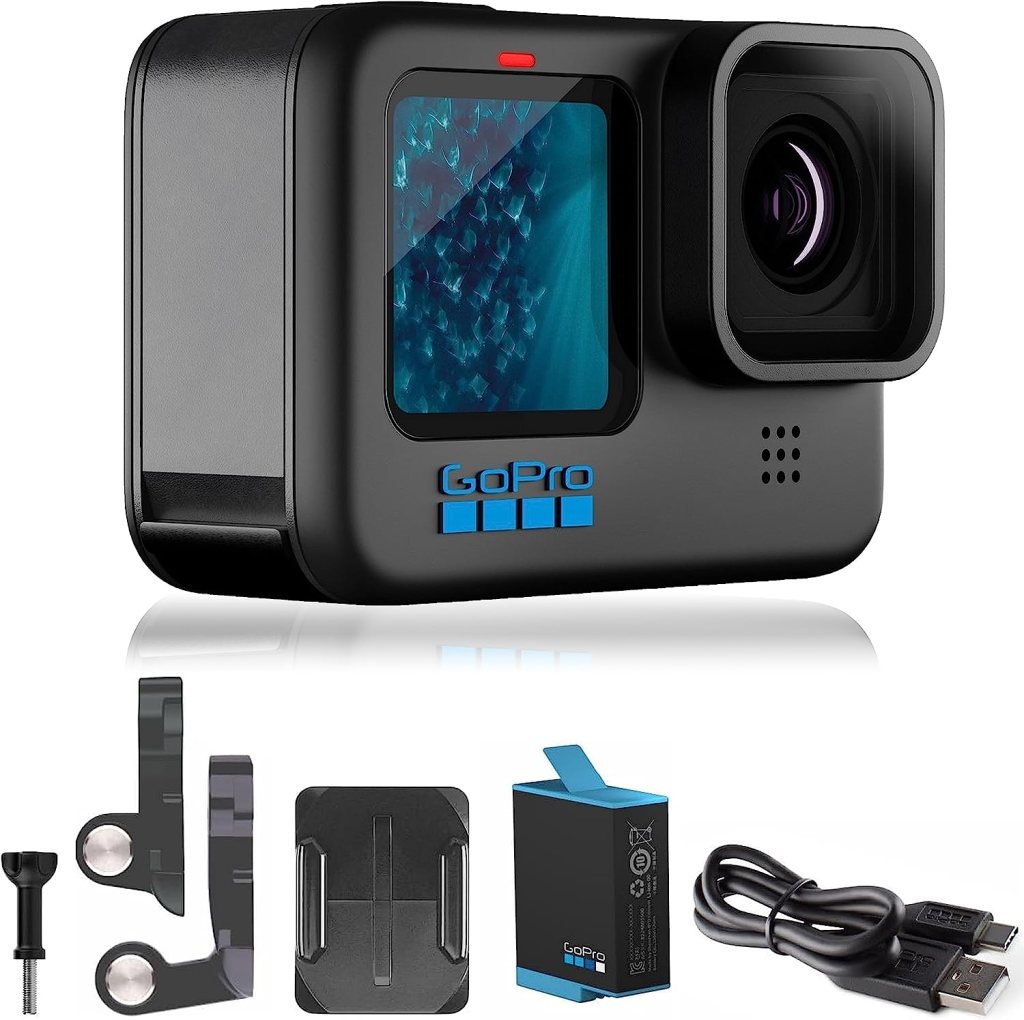
The GoPro Hero 11 and the DJI Osmo Action 4 are two of the top action cameras available in 2023. Both are capable of shooting stable, cinematic footage in any outdoor environment, but they differ significantly in a few important ways.


In order to assist you choose which camera best suits your needs, we’ll compare the features, capabilities, drawbacks, and overall performance of the GoPro Hero 11 with the DJI Osmo Action 4 in this post.
Even though they appear to be identical from the outside, the Osmo Action 4 is a significant advancement over the Osmo Action 4, while the Hero 11 is only a slight improvement over the Hero 10.

It seems like you’re comparing two different models or versions of the GoPro camera, possibly the GoPro Hero 11 and another model. Here’s a breakdown of the key differences and features you’ve mentioned:

GoPro Hero 11:

  • MSRP $399 or €449
  • Comes with slightly more accessories.
  • Offers higher bitrate video, which can result in better video quality.
  • Features an 8:7 sensor, allowing for cropping in post-production.
  • HyperView mode may have some distortion.
  • High dynamic range capability for improved contrast and detail in images and videos.
  • Better exposure metering, leading to more accurate exposure settings.
  • 10-bit color depth for more color accuracy and grading flexibility.
  • Offers three color profiles: Vibrant, Natural, and Flat, allowing for different looks.
  • Users might find the menu interface clunky or less user-friendly.
  • May drain battery when turned off, which can affect battery life.
  • Generally considered reliable and doesn’t tend to overheat during use.
  • Offers cloud storage options, but it may be slower.
  • Optional Quick app available for additional editing and sharing features.

DJI Osmo Action 4:

  • Priced at $399 or €429
  • Designed to work seamlessly with a wide range of GoPro mounts
  • Features a convenient magnetic mounting system
  • Supports native 4K vertical video recording
  • Offers a broader Field of View (FOV)
  • Delivers improved dynamic range for better image quality
  • Ensures excellent exposure even when set to automatic mode
  • Provides enhanced color depth at 10 bits, resulting in superior color separation
  • Offers two distinct profiles: Normal and D-Log M
  • Provides a wider range of shutter speed options
  • Boasts an extended battery life for longer usage durations
  • Known for its reliability and lack of overheating issues
  • Benefits from ongoing firmware support and updates
  • Requires the use of the Mimo app for optimal functionality

In conclusion, the GoPro Hero 11 and the DJI Osmo Action 4 are two of the best action cameras on the market in 2023, each having specific advantages over the model it replaces. The Hero 11 has slightly higher bitrate video, an 8:7 sensor for post-production cropping, and more accessories, but it also offers a little higher price point. It also has a wider range of color profiles for greater versatility.

On the other hand, the DJI Osmo Action 4 has a similar price, a magnetic mounting system, and is compatible with a number of GoPro attachments. It is a great option for shooting outside action footage because it excels at native 4K vertical video recording, has a wider FOV, and has outstanding dynamic range.

In contrast, the DJI Osmo Action 4 has a magnetic mounting system, a similar price, and is compatible with a number of GoPro attachments. It’s a good option for capturing outside action footage because it excels at native 4K vertical video recording, has a wider FOV, and has superb dynamic range.

The decision between these two cameras ultimately comes down to your own requirements and tastes. Both cameras provide dependable performance and are appropriate for capturing steady, cinematic film in a variety of outdoor settings. To choose an action camera that best meets your needs, take into account your intended use cases, desired features, and budget.

When to opt for a Mirrorless Camera Over a Blackmagic 6K Camera

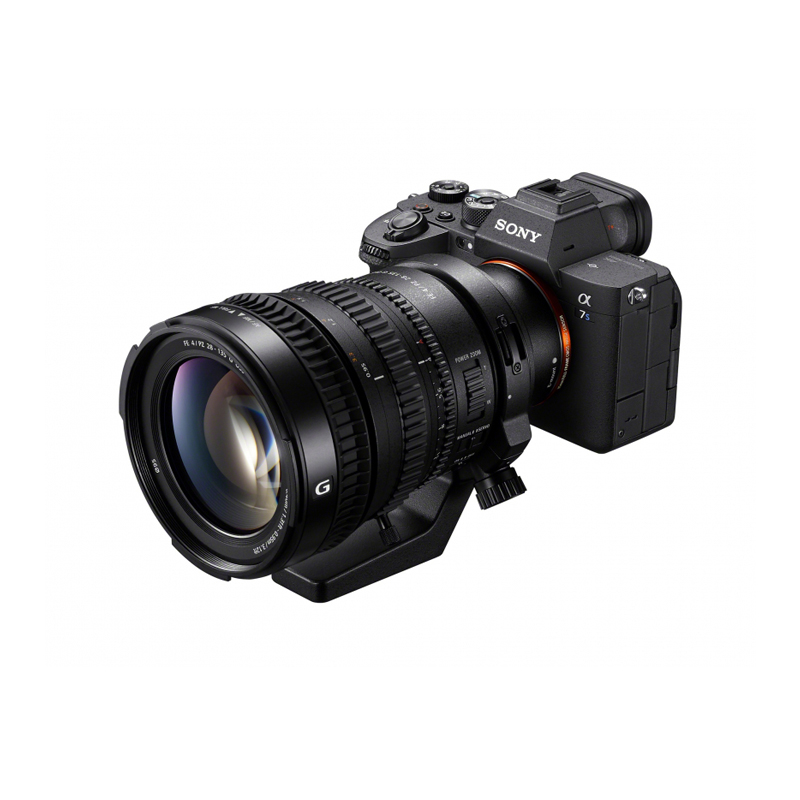
Depending on your filmmaking requirements, choosing between a mirrorless camera and a Blackmagic Pocket Cinema Camera 6K can be difficult. Both offer significant advantages. It’s crucial to take into account the following criteria in order to make an informed decision:

Filmmaking ability:

The extraordinary cinematic image quality of the Blackmagic 6K camera is well-known. It produces excellent 6K RAW video with an amazing dynamic range and color accuracy using a Super 35 sensor. The Blackmagic 6K camera is a serious contender if creating cinematic-looking and professional-quality footage is your main objective.

RAW recording:

Blackmagic cameras excel at delivering RAW recording capabilities, giving post-production professionals unmatched versatility. RAW video preserves all sensor information, enabling thorough color grading and correction. The Blackmagic 6K is a recommended option if you need the most post-processing options.

High-Quality Audio:

High-quality built-in mics and XLR audio inputs with phantom power are available on the Blackmagic 6K camera. This makes it a great choice for filmmakers that value superior audio quality in addition to visuals.

Pro video attributes

Professional video features including BRAW recording, editable metadata, and integrated ND filters are included with Blackmagic cameras. For filmmakers who seek precise control and versatility, these capabilities are very valuable.

Filmmaking-specific camera:

The Blackmagic 6K excels in this area because it was specifically created for film and video production. This camera is ideal for you if producing movies rather than taking pictures is your main goal.

It’s important to recognize the Blackmagic 6K camera’s limitations, though:

Complexity:

Comparatively speaking to mirrorless cameras, Blackmagic cameras require higher technical expertise. To fully utilize them, you might require extras like rigging and external monitors.

Portability:

Since mirrorless cameras are frequently smaller and lighter, they are perfect for travel and run-and-gun shooting. The Blackmagic 6K can weigh more and be less portable. Photography:

A mirrorless camera can be a better option if your line of work requires both photography and filmmaking because it excels in both fields.

Finally, pick the Blackmagic Pocket Cinema Camera 6K if your priorities for your films are cinematic quality, RAW recording, professional audio, and specific video features. A mirrorless camera might be a better choice if you want to take a more balanced approach or if you need a camera that can handle both photography and filming. In the end, your decision should be in line with the demands of the project and your own creative objectives.

Title: A Guide for Beginning Photographers: Choosing Your First Camera

Introduction

Entering the world of photography is an exciting venture, and choosing the appropriate camera is the first and most important step. The abundance of camera options could be too much for a beginning photographer to handle. Do not be alarmed; this article seeks to demystify the process and assist you in selecting the ideal camera for your growing photography career.

1. Understanding your needs and goals is step one.

Consider your photography goals for a moment before diving into camera details. Think on the themes you are most interested in photographing, such as landscapes, people, animals, or urban settings. Your choice of camera and lenses will depend on the type of photography you prefer.

2.Budget considerations, second

A tripod, memory cards, lenses, a camera bag, and any additional equipment should all be included in your budget. Remember that purchasing lenses and other accessories might be just as crucial as selecting the right camera.

3. Camera Types for Novices

  a. An example of a smartphone camera The camera on your smartphone can be a great place to start if you’re just getting started. Modern smartphones have superb cameras that are great for learning the fundamentals of lighting and composition.

   b. A little point-and-shoot camera These cameras are reasonably priced, simple to operate, and incredibly portable. They are ideal for novices who seek a straightforward, hassle-free camera for regular photography.

   c. Mirrorless camera The image quality of mirrorless cameras is superb and they are portable. They have the benefit of interchangeable lenses and manual controls for creative versatility, making them a flexible option for novices.

d. Digital Single-Lens Reflex (DSLR) Camera The image quality and manual control capabilities of DSLRs are well-known. They are a little bit bigger and heavier than mirrorless cameras, but they are a great option if you want room to grow and want to experiment with different types of photography.

e.  Bridge Camera Between small point-and-shoot cameras and more sophisticated cameras are bridge cameras. They frequently offer some manual control, a fixed lens, and a wide zoom range.

4. Dimensions and Portability

If you intend to carry the camera around with you frequently, pay attention to the camera’s size and weight. Cameras that are lighter and smaller could be more practical for casual shooting and travel.

5. Easy of Use

If you’re a beginner, seek for a camera with simple settings and functions that fit your level of experience. Many cameras have preset settings that let you gradually learn.

6. Reviews and research

Utilize online resources and camera reviews to learn more about different camera models. Reading user reviews and professional perspectives can be a very helpful decision-making tool.

Conclusion

In conclusion, your particular demands, objectives, and financial situation will ultimately determine the best camera for a beginning photographer. Spend some time considering the many camera alternatives, your financial situation, and your photographic interests. Remember that the best camera is the one that gives you the ability to develop as a photographer, regardless of whether you begin with a smartphone, compact camera, mirrorless camera, DSLR, or bridge camera. Cheers to the gun!